JSM CULTURE | NYC SPORTS
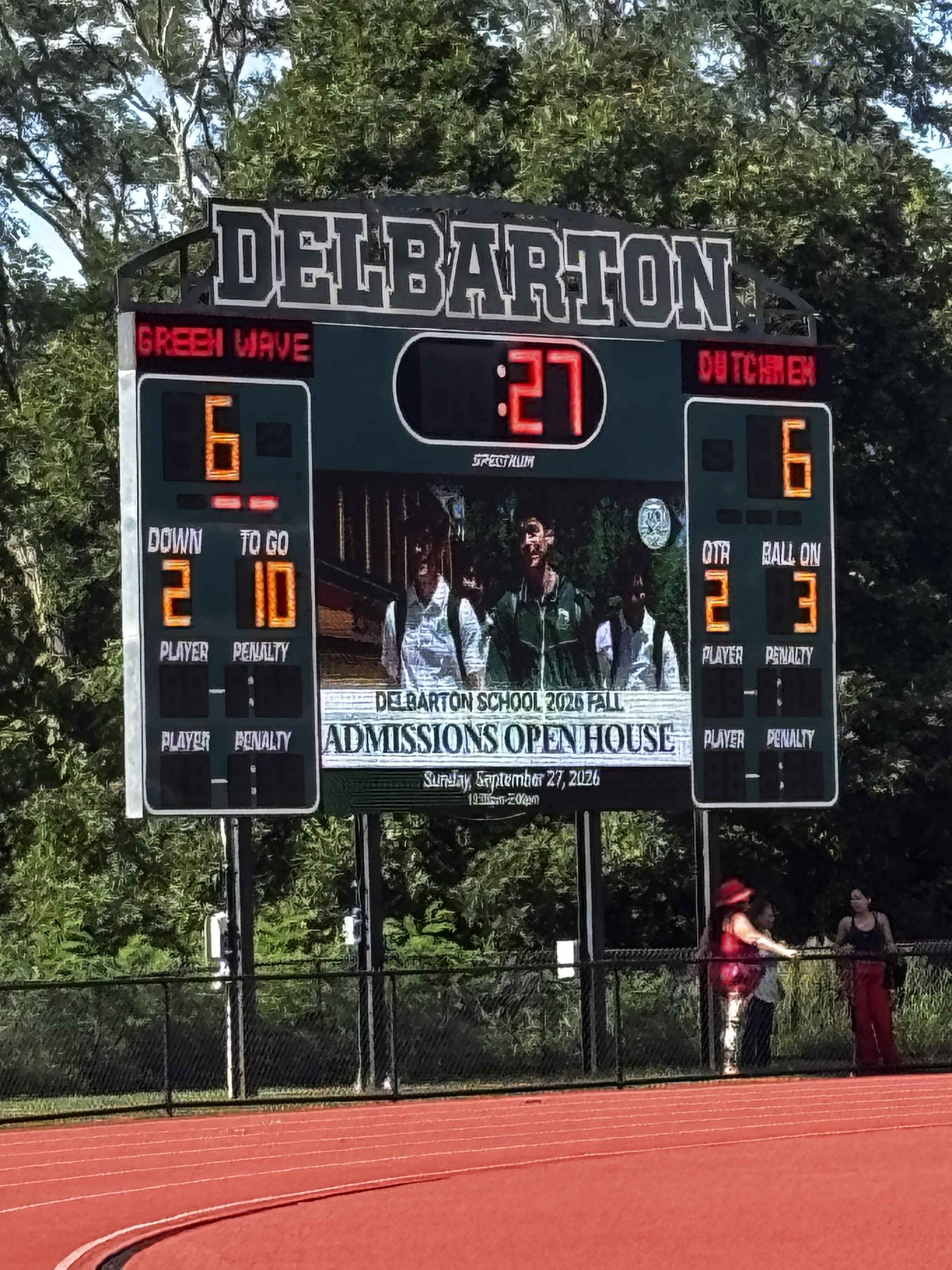
The final score says Delbarton 28, Erasmus Hall 12. The game itself was far more complicated. Erasmus controlled long stretches early, scored first and went into halftime down only one. Then a handful of costly moments turned a one-point game into a three-score deficit.
For most of the first half Friday afternoon in Morristown, the scoreboard did not look anything like the final one.
The first quarter ended 0-0. Erasmus Hall’s defense repeatedly got Delbarton’s offense off the field. The Dutchmen won field position, moved the ball on the ground and created opportunities in Delbarton territory. At one point they reached first-and-goal.
They simply could not finish.
That is the part of a 28-12 final that can disappear when the score is viewed without the game. Delbarton eventually pulled away. But Erasmus had chances to control this game before the Green Wave ever found its rhythm.


Erasmus Had Delbarton on Its Heels Early
Delbarton’s opening possession went nowhere. Erasmus had clearly prepared for Brown commit Kobe Irby-Mason and clogged the middle against a veteran Green Wave offensive line. Through much of the first half, Delbarton’s offense struggled to sustain drives while Erasmus kept getting the football back with favorable field position.
The Dutchmen’s own offense showed signs of what it could become. Sophomore quarterback Michael Bennett, making his first start of the season with Jalen Pierre unavailable, opened with quick throws and RPO concepts to senior receiver Ebube Onukaogu. Jordan Bishop ran with patience and power. Richuard Dobbin and Christian Bordeaux gave Erasmus additional options in the backfield.
On one of Erasmus’s best early possessions, Bishop helped drive the offense inside the Delbarton 10. Bennett was pressured on first-and-goal, but Erasmus kept attacking. Onukaogu appeared to score on a short pass, spinning into the end zone, only for the touchdown to be erased by a holding penalty.
That sequence would become a preview of the afternoon: Erasmus creating something, then giving part of it back.
With no regular kicker available, the Dutchmen could not simply take three points when drives stalled. They had to be more aggressive on fourth down and later on extra-point situations. On fourth-and-goal, Delbarton’s pressure reached Bennett and the pass fell incomplete.
A promising drive produced nothing.
Another Gift. Another Missed Opportunity.
Delbarton’s offense still could not get going. The Green Wave tried a fake punt late in the first quarter and Erasmus stopped it, handing the Dutchmen excellent field position.
Again, the opportunity was there.
Dobbin carried twice, but on the second run Delbarton stripped the football and recovered. Another short field disappeared without points.
It was becoming a strange game. Erasmus looked more dangerous offensively. Its defense was forcing three-and-outs. Its punting unit was pinning Delbarton deep. Yet the scoreboard remained empty.
The breakthrough finally came with 3:30 left in the second quarter.
Jordan Bishop Finally Broke It Open
On third-and-three, Bishop took the handoff, found daylight, bounced outside and ran through Delbarton’s arm tackles. Forty-eight yards later, he was in the end zone.
Erasmus Hall had scored first. 6-0.
It was exactly what Bishop had been threatening to do all afternoon. Delbarton’s defenders had been trying to tackle him with contact rather than consistently wrapping him up, and eventually he made them pay for it.
The missing kicker mattered immediately. Erasmus went for two rather than kicking an extra point. Delbarton stopped Bishop short, leaving the lead at six.
There were just over three minutes remaining in the half. Erasmus had outplayed Delbarton in several important areas and finally had the scoreboard advantage to show for it.
Then the game began to turn.
Delbarton Found Its Run Game at Exactly the Right Time
Until that point, Erasmus had done an excellent job against Irby-Mason. Delbarton had tried to run laterally and Erasmus’s front kept beating blocks to the point of attack.
Late in the second quarter, the Green Wave changed the picture. They began getting Irby-Mason downhill, leaning on the strength of their experienced offensive line and using the pistol and counter concepts more effectively.
The difference was immediate.
Delbarton drove into Erasmus territory. Quarterback Jaden Schmallz added a scramble near the goal line, and Irby-Mason finished the possession with a short touchdown run.
Delbarton had something Erasmus did not that day: a functioning kicking game.
The extra point was good.
Halftime: Delbarton 7, Erasmus Hall 6.
That score is important. The final margin was 16 points, but this was a one-point game at halftime. Erasmus had also left multiple scoring chances on the field before Delbarton took the lead.
The Third Quarter Was the Game
If the first half showed how good Erasmus can look, the third quarter showed how quickly a disciplined opponent can punish mistakes.
Delbarton came out of halftime with an adjustment of its own. Its defensive front tightened against the Erasmus run game, forcing the Dutchmen into longer down-and-distance situations.
After an Erasmus punt, Delbarton started in Dutchmen territory. Gavin Galardi hit Easton Wendorff on a short pass, and Wendorff turned it into a touchdown with help from a key block downfield.
Just like that, it was 14-6.
Erasmus still had an answer available. A strong kickoff return gave Bennett good field position, and a screen to Bishop immediately moved the chains.
Then came the biggest offensive mistake of the game.
Bennett went play-action and Joey DeSilva read the route, stepped in front of the pass and returned the interception all the way to the Erasmus five-yard line.
One play changed the entire temperature of the game.
Even then, the Erasmus defense nearly rescued the offense. The Dutchmen got pressure on Galardi and appeared positioned to force Delbarton off the field. But penalties extended the possession. A too-many-men penalty moved the Green Wave closer to the goal line, and Irby-Mason eventually scored again.
21-6.
A game that had been 7-6 at halftime had become a two-touchdown deficit through a touchdown drive, an interception and penalties that kept Delbarton alive.
Michael Bennett Was Asked to Grow Up Fast
Bennett’s stat line will include the interception, and it should. It was consequential.
But evaluating the sophomore quarterback only through that play would miss most of what happened.
This was Bennett’s first start after being thrown into the Millville game when Pierre was injured. He had already shown he could handle the position, completing 12 of 18 passes for 158 yards with a touchdown in the opener. Against Delbarton, he was facing one of the strongest defensive fronts on the schedule while Erasmus was also playing without its regular kicker.
Early, Bennett handled the quick game well. He connected with Onukaogu on RPOs and short concepts, used cadence to draw Delbarton offside and showed enough mobility to escape when the pocket collapsed.
The larger issue was protection and timing. When Delbarton brought pressure, Erasmus too often asked a young quarterback to create after the play had already begun breaking down.
That showed again early in the fourth quarter. Erasmus had put together a sustained drive and faced fourth-and-six. Bennett rolled left. Luke McBride came through the protection and buried the possession with a sack.
Delbarton then answered with another Irby-Mason touchdown, this one springing from the counter game behind the Green Wave’s pulling linemen.
28-6.
Then Erasmus Finally Opened the Field
This is where the film becomes particularly interesting.
Down 22, Erasmus began playing with more width. Five-receiver formations appeared. Bennett got the football out quickly. Onukaogu was targeted on screens and comeback routes. Dobbin caught passes in space. Delbarton’s defense had to stretch horizontally instead of attacking a compressed offense.
And suddenly, the Dutchmen started moving again.
Onukaogu broke tackles after short completions. Dobbin found more space once Delbarton had to respect the passing game. Bennett worked underneath rather than waiting for longer-developing routes against pressure.
The drive ended with Dobbin powering into the end zone from inside the 10.
28-12.
The two-point try failed, but the drive mattered beyond the score. It showed an offensive structure that looked more natural for the personnel Erasmus actually has.
That leads to the most important tactical question coming out of Delbarton:
Why did Erasmus wait until it was down 28-6 to consistently make the defense defend the entire field?
The Final Score Hides How Competitive This Was
Delbarton had a chance to bleed out the clock late, but Erasmus recovered a fumble with 2:54 remaining and gave Bennett one more possession.
He kept competing. Erasmus used quick throws, moved the chains and eventually took shots downfield. One late deep ball from Bennett was well placed and dropped. Onukaogu also left the game after suffering an apparent leg injury during the final drive.
The comeback never materialized. Delbarton finished the job, 28-12.
But this was not a four-quarter blowout.
It was 0-0 after one. Erasmus led 6-0 late in the second. Delbarton led only 7-6 at halftime. The separation came in the third quarter, when the Green Wave turned field position, an interception and Erasmus penalties into points.
Erasmus Left Too Many Points on the Field
That is the cleanest football diagnosis.
The Dutchmen had an apparent touchdown erased by penalty. They failed on fourth-and-goal. A fumble ended another drive in Delbarton territory. The absence of a regular kicker removed field goals and conventional extra points from the equation. Penalties extended a Delbarton scoring possession. Later, another penalty turned a manageable fourth down into a situation that ended with a sack.
Against an ordinary opponent, a talented team can survive some of those errors.
Against Delbarton, they compounded.
A Loaded Roster Still Has to Become a Team
This is where the larger Erasmus story comes back into focus.
The Dutchmen entered the season integrating a huge number of new players. The roster has obvious high-end talent and unusual depth. Bishop can change a game with one carry. Onukaogu demands attention outside. Dobbin and Bordeaux give Erasmus multiple backs. Ellis can contribute in the passing game. Bennett and Pierre are both young quarterbacks with real ability.
But depth is only valuable once it becomes functional depth.
That means knowing which combinations work. It means identifying who should be on the field in critical situations. It means creating packages that use different skill sets rather than simply rotating names. And it means making sure players understand their roles well enough to play fast.
With a roster this deep, there may be weapons Erasmus has not fully uncovered yet.
That is not an indictment. It is the reality of trying to merge a large group of newcomers into a championship program in September.
Player Development Is Part of Roster Management
There is also a human part to carrying this much talent.
Playing time has to be earned. That does not change. But players also need clarity. A player can accept that he is not starting if he understands the role he is being developed for, what he must improve and where his opportunity may come from.
On a team with this much competition, that communication is not separate from winning. It affects preparation, confidence, retention and ultimately how much usable depth the coaching staff actually has in November.
What Delbarton Actually Exposed
Delbarton did not expose Erasmus as a team without talent.
It exposed the difference between having talent and organizing talent. On this afternoon in Morristown, that difference showed up in the details: red-zone execution, protection, penalties, special teams and how quickly each sideline adjusted once the game changed.
Erasmus showed enough in the first half to demonstrate that it can play with a disciplined, physical opponent. Its defense controlled long stretches. Bishop was dangerous. Bennett made enough throws. The Dutchmen repeatedly moved into scoring territory.
What they did not do was convert those advantages into a lead large enough to survive the inevitable swing.
Once Delbarton’s run game found traction, once DeSilva produced the interception and once Erasmus began helping the Green Wave with penalties, the game changed quickly.
The encouraging part is that the problems are identifiable.
Protect the quarterback. Finish drives. Clean up penalties. Build the offense around space and quick decisions. Establish a clearer rotation. Find out which of the roster’s hidden weapons can actually change possessions.
Erasmus Hall is 0-2.
But after watching how the Delbarton game actually unfolded, the record may be less revealing than the question sitting in front of the Dutchmen now:
They already have the pieces. How quickly can they figure out the best way to use all of them?
This analysis draws on the full game broadcast, play-by-play, first-hand spectator observation and publicly available roster and statistical information.