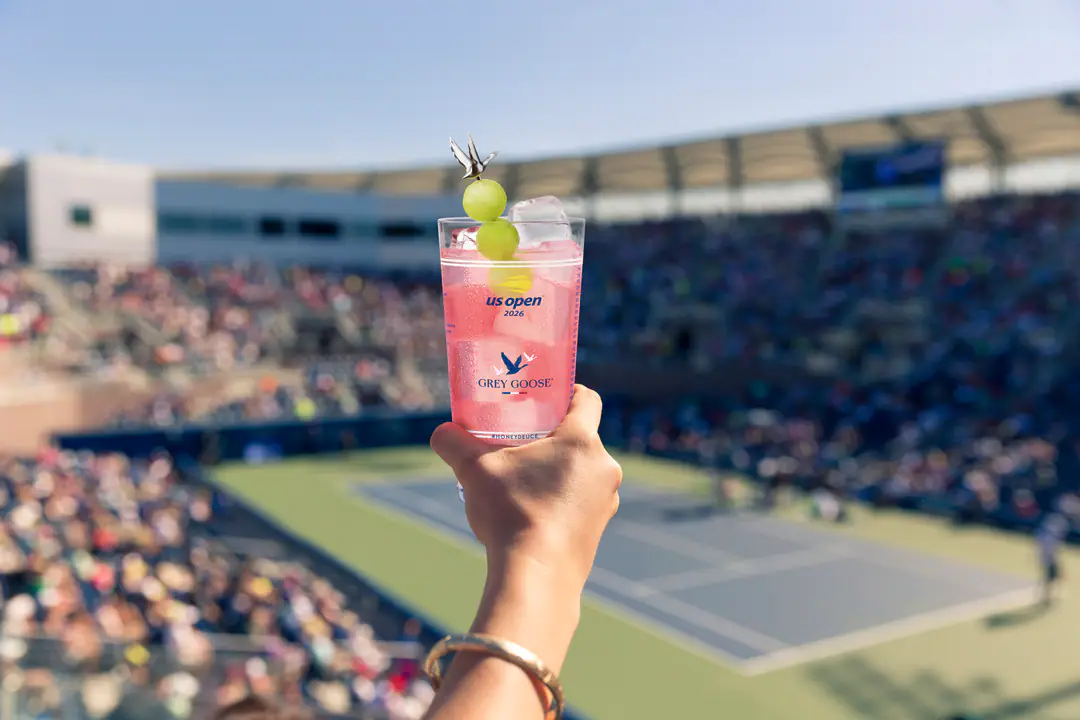
NEW YORK — The Honey Deuce is no longer just a cocktail sold inside the USTA Billie Jean King National Tennis Center. It has become one of the strongest examples of how a sports event can create a product that fans actively want to carry, photograph and remember.
The Grey Goose cocktail celebrates its 20th year at the US Open in 2026. According to Reuters, roughly 800,000 were sold in 2025 at $23 each, up from an initial run of 25,000 when the drink debuted in 2007. The commemorative cup, printed with the names of past champions, has become part of the appeal.

A sponsorship asset people choose to display
That is the marketing lesson. Most event sponsorship is something fans see. The Honey Deuce is something fans voluntarily hold in photos, bring back to their seats and, in many cases, take home.
It turns a beverage purchase into a visible piece of event identity. The cup becomes a prop, keepsake and proof of attendance. Social media then extends the life of that object well beyond the grounds.
The US Open is moving the experience beyond Flushing
This year, the event’s signature drinks are also showing up across New York at bars, restaurants, hotels and airports. That matters because it stretches the tournament footprint into the city and gives people who never enter Arthur Ashe Stadium another way to participate in US Open culture.
Grey Goose pushed that strategy further in 2026 with the return of The Last Serve Bar at Grand Central Terminal and a New York-facing campaign with Josh Hart. The activation gave commuters and fans a branded US Open moment in Vanderbilt Hall while the Hart partnership connected the drink to another piece of the city’s sports culture. That is what strong experiential extensions do: they let an event show up where people already are instead of asking every fan interaction to happen inside the venue.
The strategy makes the tournament feel less like a two-week event contained in Queens and more like a citywide season.
Premium price, mass-scale operations
The Honey Deuce also illustrates the tension at the center of modern fan experience. Fans expect premium quality, but the event must serve enormous volume quickly. Reuters reported that hospitality partner Levy uses pre-batched cocktails and that teams prepare between 2.5 million and 3 million honeydew melon balls for the tournament.
Operationally, batching makes sense. Experientially, the risk is perception. Once a fan pays a premium price, every visible shortcut can become part of the value judgment.
How the drink became the experience
The best sports sponsorships do not feel like sponsorships. They become rituals. The Honey Deuce works because fans have adopted it as part of what “going to the US Open” means.
For brands trying to build relevance in live sports, that is the target: create something people would miss if it disappeared.
SOURCES: Reuters · US Open · Grey Goose