NEW YORK — Naomi Osaka did not treat the 2026 US Open entrance like the few seconds before the tennis started. She treated it like a series.
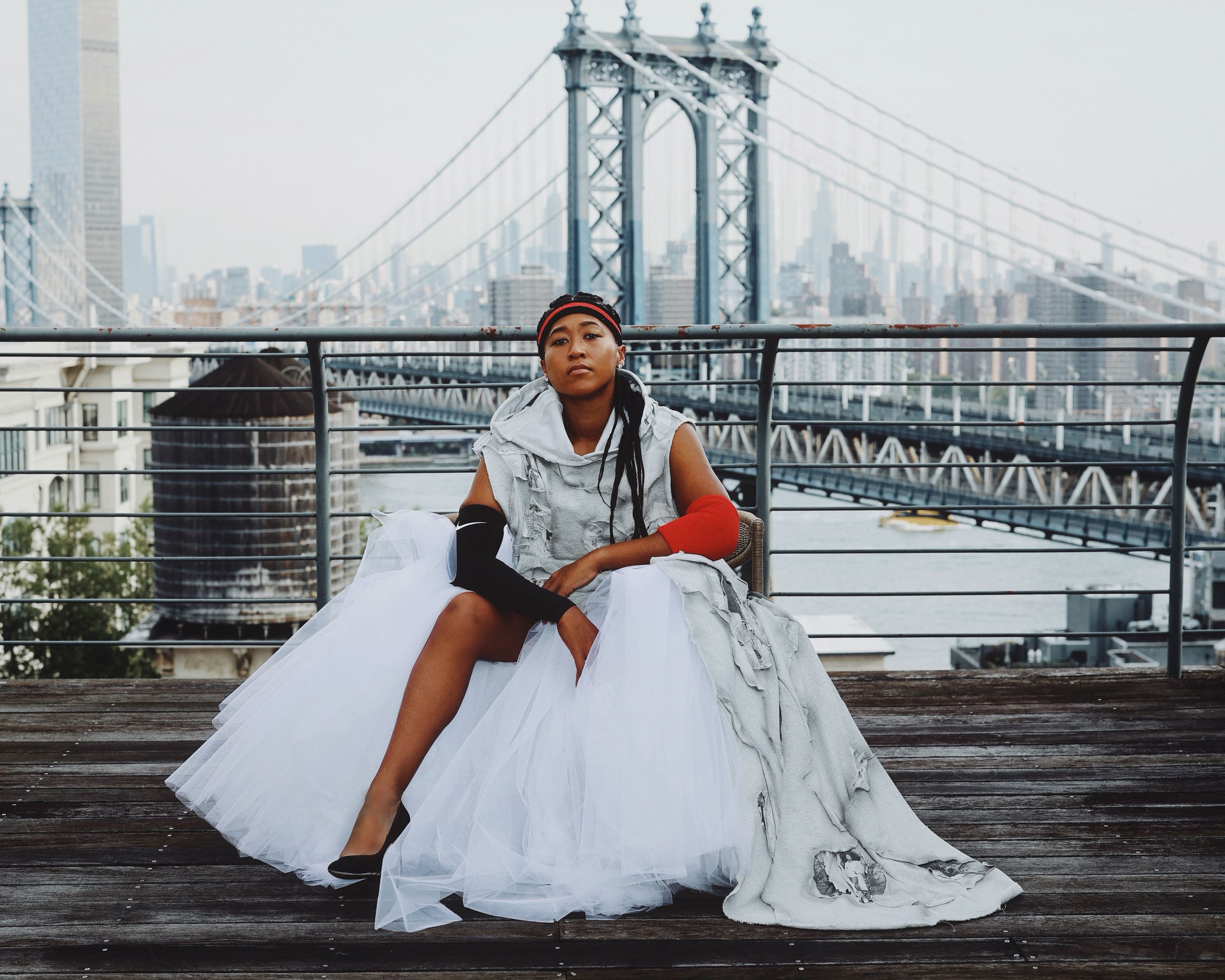
Across her New York run, Osaka and stylist Law Roach built a fashion arc around basketball, streetwear and the city itself. The story moved from an Allen Iverson tribute and Who Decides War to Thom Browne, Monse and a final KidSuper cloak that Osaka said made her feel especially connected to New York.


The roses made the Iverson reference unmistakable
Osaka extended the tribute beyond the walk-on look with a Sebastian Arriagada portrait that directly recreates Allen Iverson’s famous roses image. The red drape, basketball, scattered petals, braids and bouquet turn a fashion reference into a cross-generational sports portrait.
The reference traces back to Gérard Rancinan’s 2001 Sports Illustrated portrait of Allen Iverson. Osaka’s 2026 recreation translates the image through her own tennis and fashion story, turning homage into a new athlete portrait.
Allen Iverson was not a random reference
Osaka publicly identified Iverson as a model for the way an athlete can merge sport, culture and style. Her first-round entrance translated that idea through a custom Who Decides War look, braids, arm sleeves and basketball-coded styling rather than simply putting his name on a mood board.
The choice mattered because Iverson’s influence was never limited to basketball. His dress, hair and attitude changed how athletes could present themselves inside a league culture that often wanted players to look more controlled.
Then the tournament became a runway with a scoreboard
Osaka continued the concept through later rounds, making each arrival part of the anticipation around the match. Fashion publications covered the entrances. Sports outlets covered the references. Fans reposted the looks before competition began.
That is modern athlete media inventory in its clearest form. The competition creates the stage. The entrance creates another story.
The final look brought Brooklyn into the story
For her final walk-on, Osaka wore a multicolored, fur-trimmed cloak by Brooklyn-based label KidSuper. The piece closed a tournament-long fashion narrative that had already moved through basketball references and New York designers.
That is what made the run stronger than a collection of “fits.” The clothes were connected by an idea: New York basketball culture translated through tennis.
Why brands should pay attention
The athlete entrance now travels across fashion media, sports media, sponsor channels, social platforms and fan accounts before the event itself has fully started. For athletes and brands, that means the tunnel, walkway and arrival zone are no longer dead space.
But the lesson is not “wear something loud.” The reason Osaka’s series worked is that the clothes had references, collaborators and cultural logic.
The best athlete style does not distract from the sport. It expands the world around it.