QUEENS. The easy headline is that American men’s tennis finally has another real shot at ending a Grand Slam title drought that has lasted since Andy Roddick won the US Open in 2003.
The better headline is Ben Shelton versus Frances Tiafoe.
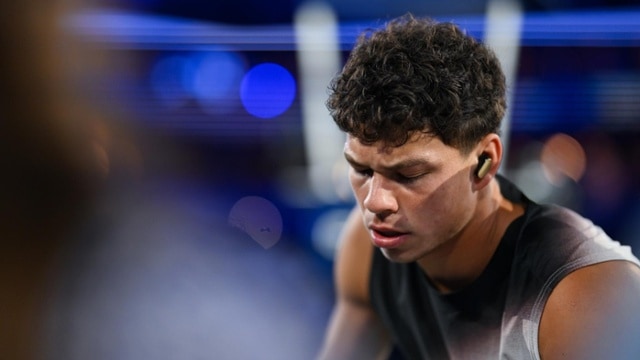
On Friday at Arthur Ashe Stadium, two of the most charismatic American men in tennis will meet for a place in the 2026 US Open final. Shelton arrived there by taking down defending champion Carlos Alcaraz in a five-set quarterfinal that ended at 3:33 a.m., the latest finish in tournament history. Tiafoe arrived after his own five-set comeback against Alex Michelsen.
One of them will leave Arthur Ashe as a US Open finalist. That alone matters. But this semifinal also carries a milestone that reaches beyond a drought narrative: Reuters reported that Shelton and Tiafoe will be the first Black American men to face each other in a Grand Slam semifinal during the Open Era.


Two different energies, one New York stage
Tiafoe has made New York feel like his tournament for years. He reached the US Open semifinals in 2022 and 2024, and the relationship between Tiafoe and the Ashe crowd has become part of his identity. His tennis can be emotional, expressive and deeply connected to the room.
Shelton brings a different voltage. His left-handed serve can change the geometry of a match, and against Alcaraz he showed the composure to survive a match that stretched deep into the night. The final point came on a 146-mph ace, the kind of punctuation that makes a New York crowd remember exactly where it was.
Ben Shelton’s five-set quarterfinal win over defending champion Carlos Alcaraz. Video: US Open Tennis Championships.
Frances Tiafoe’s five-set comeback against Alex Michelsen. Video: US Open Tennis Championships.
The actual 2026 US Open semifinal between Frances Tiafoe and Ben Shelton. Video: US Open Tennis Championships.
The representation inside the moment
American tennis history is impossible to discuss without Arthur Ashe, Althea Gibson, Venus Williams, Serena Williams and the athletes who expanded who could be imagined at the center of the sport. Shelton and Tiafoe are not responsible for carrying all of that history onto court with them. They are there to compete.
Still, visibility has meaning. A Black American semifinalist is not an abstract idea on Friday. There will be two of them, playing each other for a place in the final, in the stadium named for Arthur Ashe.
Coco Gauff called attention to that significance this week, celebrating the growth of Black American representation at the tournament. That context is worth preserving because sports milestones are often bigger in retrospect than they feel in the moment.
The drought is real, but it should not swallow the players
No American man has won a Grand Slam singles title since Roddick’s 2003 US Open. Every deep run since then has been measured against that number. It can become a burden, especially when a new generation is constantly asked to answer for the previous two decades.
Friday offers a more interesting way to watch. Shelton does not need to be the next Roddick. Tiafoe does not need to carry American tennis by himself. They have already created a semifinal that feels distinctly of this era: powerful, expressive, culturally visible and comfortable with personality.
The match beyond the lines
The serve, the returns, the nerves and the crowd will command attention. So will the theater around the match: the entrances, the reactions, the celebrity audience, the sponsor visibility and the way the winner’s story changes the moment he reaches the final. That wider event ecosystem has shaped the tournament all along, from Naomi Osaka turning the walkout into a fashion series to the Honey Deuce becoming a New York brand story.
New York is very good at turning competition into culture. Shelton versus Tiafoe is already more than a bracket line. Friday will decide who gets to carry that story one match further.
Sources: US Open · US Open: Tiafoe quarterfinal · Reuters reporting on the historic Black American semifinal.