

NEW YORK — The most valuable thing in Times Square is not the sidewalk. It is attention.
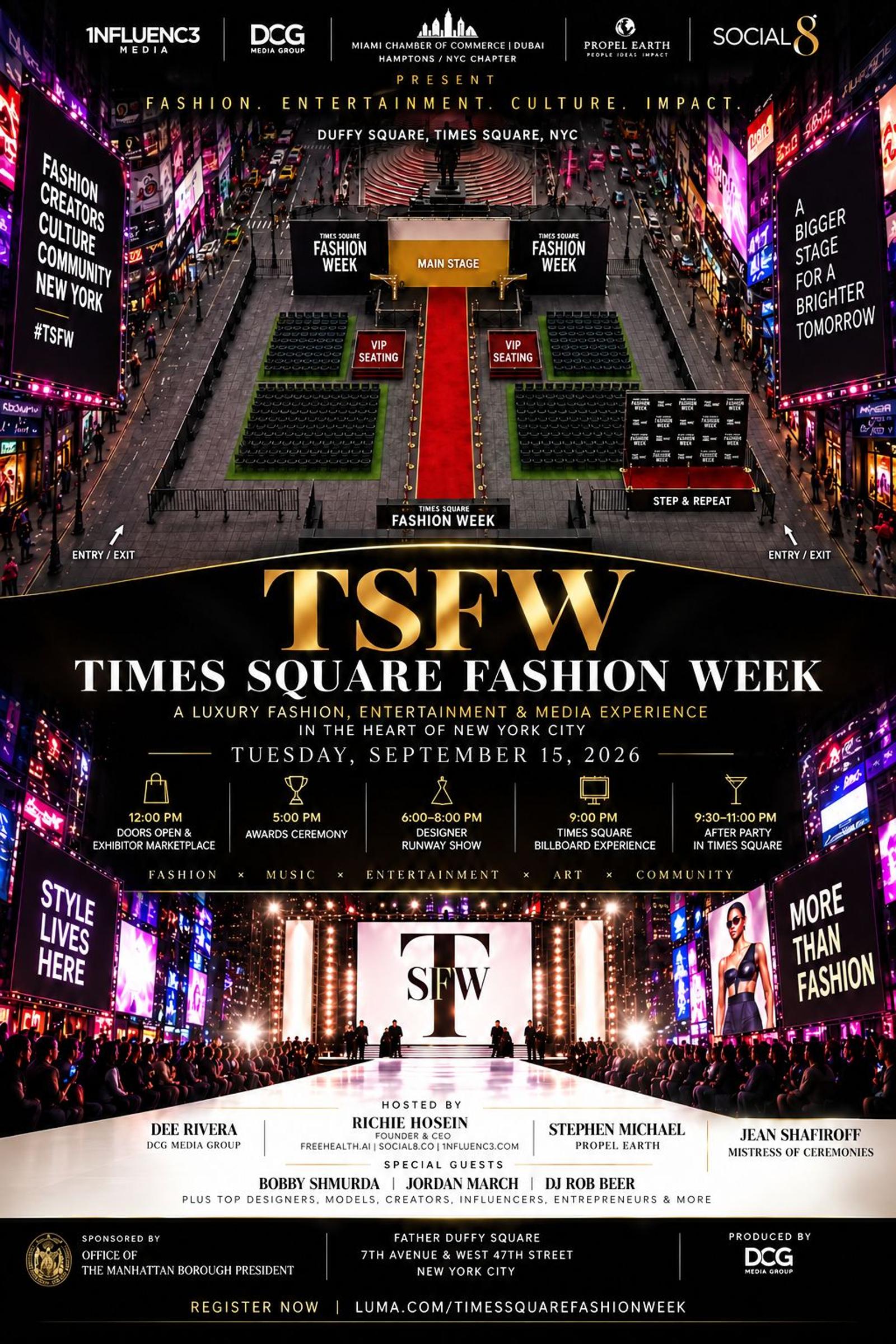
On September 15, Times Square Fashion Week returns to Duffy Square with runway shows, awards, live entertainment and public-facing programming in the middle of Manhattan. The Times Square Alliance lists the event from noon to 8 PM and free to the public, while organizer listings extend the broader program into the evening with a designer billboard experience and after-party programming.
That structure makes the event more than another runway stop. It turns fashion into a live media system built around public space, creators, digital screens and cultural crossover.
The venue is also the distribution channel
Most fashion shows happen inside rooms designed to control who gets in. Times Square works in the opposite direction.
Tourists, commuters, creators and anyone moving through Midtown can encounter the show. The runway is not only a presentation space. It becomes out-of-home media against one of the most recognizable commercial backdrops in the world.
Organizer materials for the 2026 edition list an exhibitor marketplace, awards, designer runway programming and a 9 PM billboard component. That means the event can move from physical runway to giant-screen visibility without leaving the same few blocks.
The show happens on the ground. The campaign continues above it.
Creators are part of the production plan
The organizer’s current access structure also includes a dedicated creator and press pathway, with approved creators and journalists expected to produce coverage after the event.
That is not a small operational detail. It reflects how fashion distribution has changed.
Editors and photographers still matter, but creators now function as part of the media infrastructure surrounding a show. A brand may reach hundreds in the physical viewing area while creators extend the moment to audiences far beyond Duffy Square in real time.
Fashion, music and experiential marketing are converging
Current organizer listings name Bobby Shmurda, DJ Rob Beer, Nolé Marin and Jordan March among the scheduled talent, with Bobby Shmurda tied to an 8 PM appearance and suit runway segment. Those names are organizer-announced and remain subject to event-day changes.
The logic behind the bookings is clear even before the first look hits the runway.
Music expands cultural reach. Creators expand digital reach. Times Square provides physical reach. Billboards create advertising reach.
That is the same layered thinking sports organizations have used for years to build fan experiences around games. The core product may be the runway, but the full experience includes entertainment, sponsors, creators, hospitality, retail and social content.
Attention is the real runway
New York Fashion Week is increasingly decentralized. Some of the most culturally interesting moments now happen outside the traditional show calendar, across hotels, sidewalks, public plazas, rooftops, stores and neighborhood activations.
That fragmentation creates opportunity for brands that understand how to combine place, community, content and distribution.
Times Square offers all four in one environment.
The runway is still where fashion is shown. The real competition is over who controls the attention around it.
Sources: Times Square Alliance; Eventbrite organizer listing; Times Square Fashion Week organizer page.