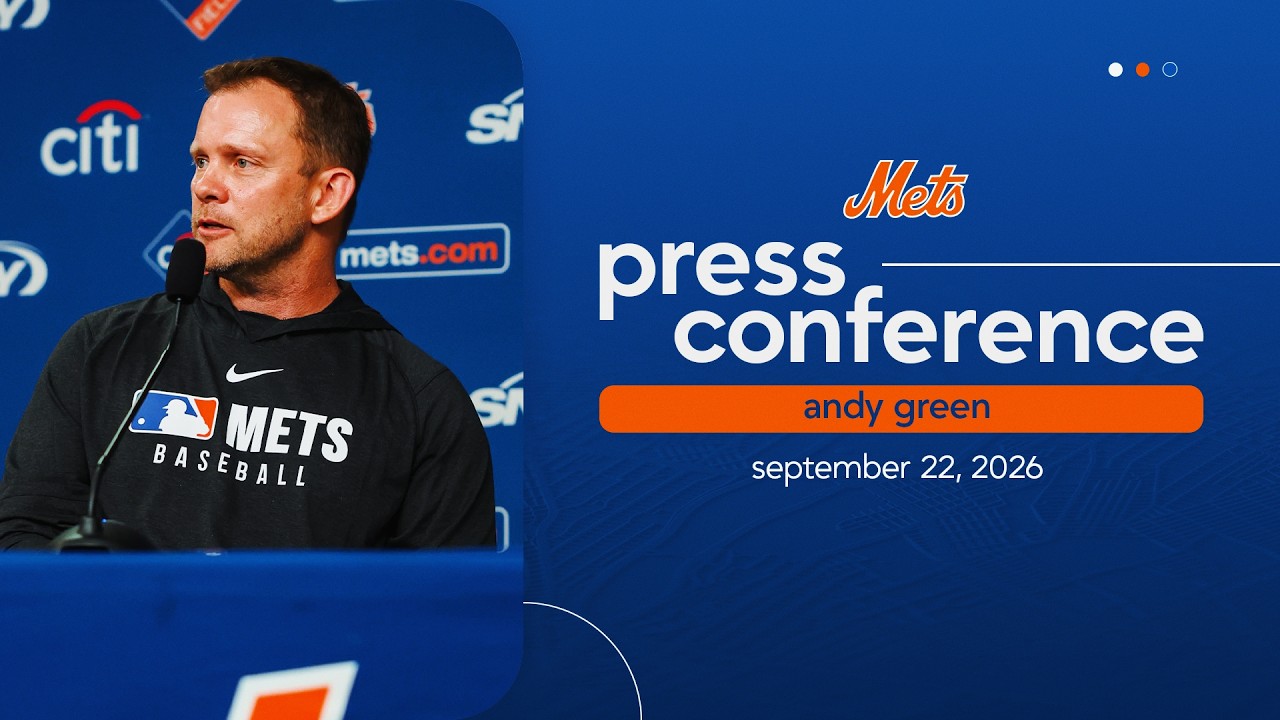
NEW YORK — The Mets have made their first major decision of the offseason, and it is a vote for continuity after a season defined by disruption. Andy Green, who took over the dugout in June, has signed a three-year contract to remain manager through 2029.
The move turns a temporary arrangement into the clearest statement yet about how president of baseball operations David Stearns wants the next version of the club to work. Green was not brought in as a celebrity reset. He was chosen because the organization already knows how he communicates with young players, how he handles losing stretches and how he moves between the front office and the clubhouse.
A 37-38 audition in a difficult season
Green guided the Mets to a 37-38 record as interim manager after replacing Carlos Mendoza in June. That near-.500 stretch came while the club moved established players at the trade deadline and handed larger roles to a younger group that included Carson Benge, A.J. Ewing, Nolan McLean and Zac Thornton.
Those names matter to the decision. Before moving into the manager’s chair, Green led the Mets’ player-development operation. He had already worked with several of the players who reached Queens during the season, giving the club a manager whose relationships did not begin when the lineup card arrived.

Stearns described Green as “the perfect person for this job” in the club’s announcement. The owners, Steve and Alex Cohen, pointed to discipline, accountability and positivity. The language is revealing: the Mets are emphasizing the day-to-day culture of the clubhouse as much as tactics or résumé.
The player-development choice
Green’s baseball life gives the hire two distinct readings. The first is familiar. He previously managed the San Diego Padres from 2016 through 2019, finishing 274-366. The second is the one the Mets are betting on: years spent closer to development have changed how he challenges players and how he builds trust.
That blend may be especially important for a club that entered the second half with fewer short-term expectations and more questions about who belongs in its next competitive core. A manager with a development background can make those auditions meaningful, but the job changes once the standings reset. Patience in a transition year becomes pressure when spring arrives.
Why the three-year term matters
A contract through 2029 gives Green more than a one-season trial, but it does not soften the central demand. The Mets must turn development into wins. His 37-38 record showed that the club could remain competitive after the deadline sell-off. It did not prove that the same voice can lead a contender across a full season.
Green will also have to manage a different kind of roster tension. Young players need regular work and clear expectations. Veterans expect urgency. A front office building toward the future still has to answer for the present. The manager becomes the person who translates all three timelines into one clubhouse.
The family dimension adds another layer. Green had previously told his daughters that he would not return to managing until they had finished high school. After discussions with his wife and three daughters, he reconsidered. His twin daughters are high school seniors, and he expects to miss a game or two next season for their graduation.
The choice is now official. The easy narrative is that the Mets rewarded a respectable interim run. The sharper one is that they chose a manager whose credibility rests on knowing the organization from below the major-league level. In 2027, that familiarity will have to produce more than steadiness. It will have to produce a team with a clear identity and a winning record.
Sources: MLB.com’s report on Green’s three-year contract and the Mets’ September 22 press conference.
Read more from JSM CULTURE’s NYC Sports coverage.